
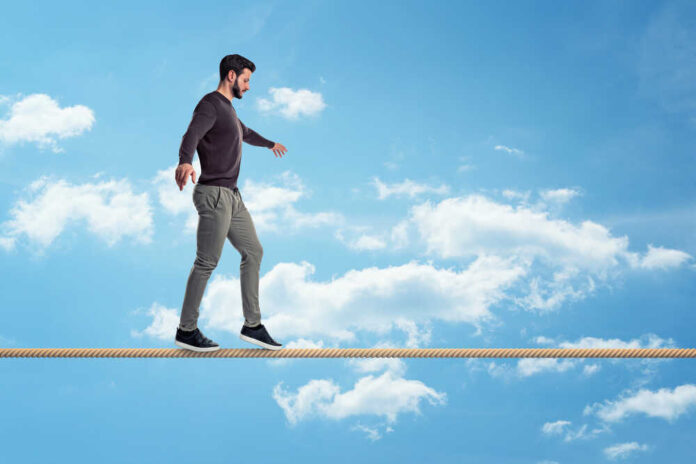
Balance training may sound like something that should be reserved for seniors, and while it’s absolutely beneficial for them, it is extremely helpful for people of all ages and fitness levels. Whether you’re 25 and chasing PRs, 45 and juggling a desk job and kids, or 75 and focused on staying independent, training balance builds the foundation for strength, coordination, and confidence in movement.
Here’s a fun, in-depth guide that shows how balance training can evolve with you—no matter your age, fitness level, or mobility.
What Balance Really Means
Balance isn’t just “not falling.” It’s your body’s ability to keep your center of gravity over your base of support while everything moves and changes around you.
Three systems work together:
- Eyes (visual system): Help you orient yourself in space.
- Inner ear (vestibular system): Senses head movement and acceleration.
- Muscles and joints (proprioception): Tell your brain where your limbs are without looking.
When one system weakens (like vision or ankle strength), the others step up, but only if they’ve been trained. That’s why balance practice pays off at every age.
Why Balance Matters for Everyone
- Athletes: Better stability means more power transfer, better agility, and fewer rolled ankles.
- Lifters: Proper balance improves bar path, joint alignment, and lifting longevity.
- Older adults: Strong balance reduces falls—the #1 cause of injury among seniors.
- Beginners or post-injury: It restores coordination and confidence in your movement patterns.
- Desk workers: It reconnects brain and body after long hours of sitting and “disconnection.”
Bottom line: balance is a use-it-or-lose-it skill, and the good news is that it can be regained quickly.
The Balance Spectrum (find your level)
Beginners: are those looking to stand taller and improve stability in walking and climbing stairs
Intermediates: are those looking to move confidently during workouts and balance on one leg
Advanced: are those looking to improve agility in sports, trail running, or balance under heavy load.
You can start anywhere—what matters most is progression, not perfection.
Foundational Balance Drills for Everybody
Level 1: Grounded and Gentle (Beginners or older adults)
Focus: joint mobility, posture, and body awareness.
Try:
- Heel-to-toe walk: Slow 10 steps, then back.
- Single-leg stand (holding a counter if needed): 10–20 seconds per side.
- Seated march: Lift knees alternately while sitting tall.
- Chair squats: Sit and stand without using hands.
- Wall push-offs: Step back and press gently into the wall for shoulder stability.
Do these 3–4 times a week. Small, frequent practice builds fast progress.
Level 2: Strong and Steady (Intermediate)
Focus: single-leg strength and stability through motion.
Try:
- Split squat (stationary lunge) – 3×8–10 reps/leg.
- Single-leg Romanian deadlift (bodyweight or light dumbbell) – 3×8/leg.
- Step-downs – 3×6 each leg from a low step.
- Farmer’s or suitcase carry – 3×20 steps, one side at a time.
- Lateral band walks – 3×10 steps each direction.
Add these into your regular strength days—just 10–15 minutes improves coordination and muscle activation.
Level 3: Dynamic and Athletic (Advanced)
Focus: reactive control and real-world movement.
Try:
- Hop and stick: Jump forward or sideways, land quietly, hold 2 seconds.
- Single-leg reach: Stand on one foot and reach forward or sideways with the opposite hand.
- Half-kneeling press or Pallof press: Core and hip balance under load.
- Agility cone drills: Move in patterns—forward, back, side shuffle, and pivot.
- Balance board or BOSU squats: Optional once fundamentals are strong.
2–3 sets per exercise, 2–3 times a week, keeps nervous system “sharp” and adaptable.
Everyday Balance Habits
You don’t need special gear, just small tweaks to daily life:
- Stand on one leg while brushing your teeth (switch legs halfway).
- Walk backward safely down a hallway to challenge proprioception.
- Carry groceries in one hand to engage core balance.
- Take the stairs instead of the elevator to build coordination.
- Play more: Toss a ball, dance, do balance games with kids or grandkids.
Small, playful challenges compound into big gains over time.
Modifications for Common Limitations
- Knee or hip pain: Choose supported movements (like wall sits, seated marches, or supported single-leg holds).
- Post-surgery or older adults: Start with assisted balance—light touch on a wall, countertop, or walker for feedback.
- Vertigo or vestibular issues: Focus on slow head turns and gentle gaze stability exercises.
- Joint hypermobility: Keep slight tension in muscles, focus on control over range.
A 10-Minute Daily Routine (All Levels)
- Ankle rocks: 10 reps forward/backward.
- March in place: 30 seconds.
- Single-leg stand: 20 seconds/leg.
- Side-to-side step: 10 each direction.
- Heel-to-toe walk: 10 steps forward/back.
- Chair squat or split squat: 10 reps.
- Carry an object (bag, book) in one hand: 30–45 seconds.
You can scale the difficulty by:
- Closing your eyes (only if safe and supported).
- Turning your head side-to-side while balancing.
- Using light weights.
- Standing on a soft surface (folded towel, foam pad).
How Often to Train Balance
- Beginners/Older adults: 5–10 minutes a day or short bouts several times weekly.
- Intermediate/Advanced: 2–3 sessions per week, often integrated into warm-ups or finishers.
- Athletes: Maintain 1–2 sessions/week plus sport-specific balance drills.
Balance improvements can appear in as little as 2–4 weeks with regular practice.
The Payoff
- Better posture and confidence: You’ll walk taller and move smoother.
- Improved strength and power: Balance unlocks efficiency—no more energy leaks.
- Fewer falls and injuries: You’ll recover from stumbles and uneven ground faster.
- Sharper brain-body connection: Balance work stimulates the nervous system and keeps the mind engaged.
- Ageless athleticism: It’s the secret sauce to moving well at 30, 60, or 90.
Balance isn’t a niche goal—it’s the foundation of every movement you’ll make for the rest of your life. Whether you’re chasing a marathon, gardening pain-free, or keeping up with grandkids, balance training is strength training for your future self.
Copyright 2025, GoHealthier.com