
The opioid epidemic has been nothing short of a disaster; a drug class meant to control pain has perhaps inflicted more pain and death than it has helped, and yet we still need them to treat severe pain. But could there be another plant that could treat pain without the high risks of addiction and overdose? Some claim that kratom could be such a plant, but what is it, and is it effective, and if so, is it any safer than opioids?
What kratom is—and where you’ll run into it
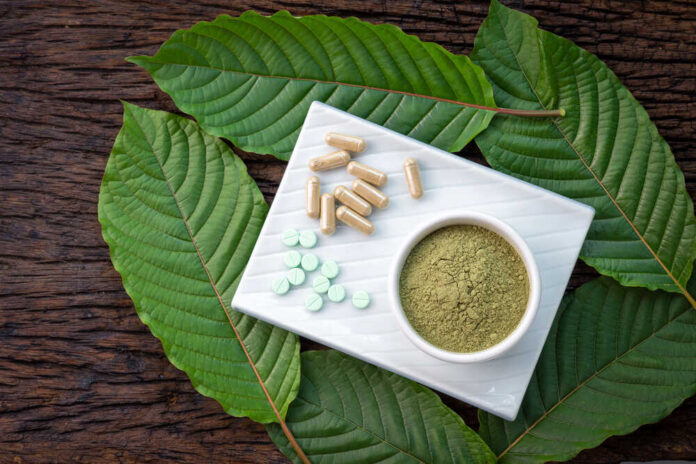
Kratom (Mitragyna speciosa) is a tropical tree from Southeast Asia. Its two best-known alkaloids—mitragynine and 7-hydroxymitragynine (7-OH)—act at mu-opioid receptors, which is why low doses can feel stimulating while higher doses feel opioid-like. In the U.S., you’ll see kratom sold as powders, capsules, teas, and concentrated “extracts” or “shots”—often in vape/smoke shops, some convenience stores and gas stations, supplement sites, and “kava/kratom bars.” Product names may reference strains (“Maeng Da,” “Bali”), and labels sometimes carry evasive “botanical research—not for human consumption” disclaimers. Recently, high-potency 7-OH products (gummies, shots, vapes) have appeared; the FDA has moved to restrict or warn about these concentrated 7-OH items given their opioid-like risk profile. Laws vary by state and are changing.
Does kratom help with pain?
Plenty of users say yes. Scientifically, the evidence is limited: a few small human studies and surveys suggest analgesia, but robust randomized trials are sparse, and we don’t have high-confidence dosing, duration, or head-to-head comparisons with standard pain meds. Translation: promising anecdotes, thin clinical proof.
The risks you should count on
- Dependence & withdrawal. Regular use can lead to tolerance and an opioid-like withdrawal syndrome (anxiety, muscle aches, insomnia, GI upset) when stopping, which is consistent with its receptor profile.
- Overdose & mixing risks. Kratom shows up in a small fraction of overdose deaths, usually with other substances on board (fentanyl, opioids, benzos). A few cases list kratom alone, but polysubstance use dominates, and real caution is still advised.
- Liver injury. Case series and NIH reviews link kratom to cholestatic hepatitis/acute liver injury—rare, but real; watch for dark urine, itching, jaundice.
- Seizures, contamination, potency swings. U.S. products have been tied to salmonella outbreaks and variable alkaloid content; concentrated extracts and “7-OH” items appear riskier. The FDA warns against kratom for safety reasons and notes there are no FDA-approved kratom drugs.
“But is it safer than opioids?”
Different risks, but not necessarily safer. Compared with full-agonist prescription opioids, kratom may have lower documented fatality rates (especially alone), but it still acts on the same receptor family, can create dependence, and, in concentrated forms (notably 7-OH), looks closer to classic opioids than to a benign tea. The FDA has specifically targeted 7-OH products for enforcement because of abuse potential. Bottom line: kratom isn’t a clean “opioid alternative”; it’s an opioid-receptor-active product with less regulation and less clinical evidence.
If you’re considering kratom anyway (harm-reduction basics)
Info only—not medical advice. If you have pain or are tapering opioids, involve your clinician.
- Don’t mix with alcohol, benzodiazepines, opioids, or sedatives, because overdose risk climbs fast.
- Avoid high-potency extracts/“7-OH” products and vapes. These are the ones regulators are flagging as most dangerous.
- Start low, go slow (potency varies wildly), and stop for liver symptoms (jaundice, dark urine, itching, right-upper-abdomen pain).
- Pregnant or trying to conceive? Avoid—neonatal withdrawal has been reported after in-utero exposure.
- Know your state’s law; some states ban kratom, others regulate it. (Check current state rules before buying.)
Better-studied pain strategies to ask about
- Non-opioid meds: acetaminophen/NSAIDs (when appropriate), duloxetine, certain anticonvulsants for neuropathic pain, topical lidocaine/capsaicin.
- Movement & modalities: physical therapy, graded exercise, CBT-I for the sleep-pain loop; interventional procedures when indicated.
- If tapering opioids: buprenorphine strategies can reduce cravings and overdose risk, and, unlike gas-station powders, they’re dosed, monitored, and regulated.
Kratom sits between “promising plant” and “public-health headache.” It can relieve pain for some, but it can also hook you, hurt your liver, and land you in the ER, especially with concentrated or adulterated products or polysubstance use. Until high-quality clinical trials and consistent regulation catch up, kratom is not a safe, proven alternative to opioids; it’s an opioid-like product with its own risks.
Copyright 2025, GoHealthier.com