
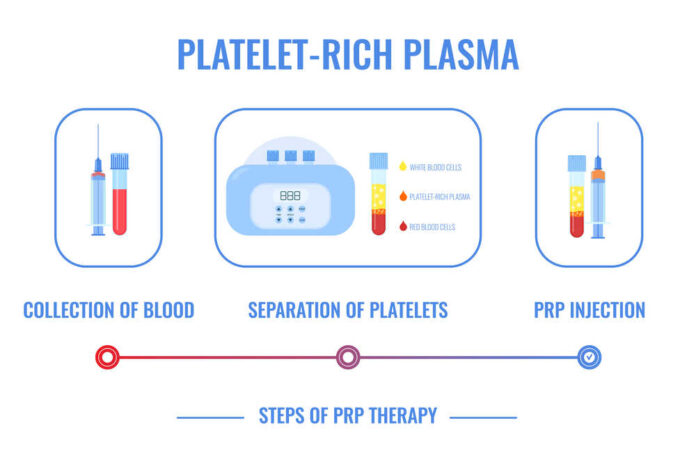
Platelet-rich plasma (PRP) has a great elevator pitch: take a vial of your blood, spin it in a centrifuge to concentrate the platelets, then put those growth-factor-packed platelets back where you’re hurting so the body’s own repair crew can clock in. It’s simple, sci-fi, and a little splashy, which is why athletes, weekend warriors, and hair clinics all talk it up. Who wouldn’t like the idea of ditching side-effect riddled pharmaceuticals and using our own platelets to heal ourselves? But how well does it actually work? Let’s sort the signal from the noise.
What exactly is PRP?
PRP is made by drawing your blood and concentrating the platelets (usually 2–5× baseline) in plasma. Those platelets release growth factors (PDGF, TGF-β, VEGF, IGF-1, and others) that can influence inflammation and tissue repair. In practice, clinicians prepare PRP with FDA-cleared devices for separating platelets, but PRP itself isn’t FDA-approved for any specific injection use, so most orthopedic/derm uses are off-label. Professional groups (e.g., AMSSM) emphasize careful patient selection and informed consent.
What are people using PRP for, and how strong is the evidence?
Think of PRP’s evidence like a stoplight: some green (good support), some yellow (mixed/limited), and some red (doesn’t beat placebo or standard care).
Musculoskeletal
- Knee osteoarthritis (OA) – Yellow/Green. Several recent meta-analyses show PRP can improve pain and function vs placebo and sometimes vs hyaluronic acid or corticosteroid up to 6–12 months, but guideline bodies remain cautious because studies vary in how PRP is made and used. AAOS flags inconsistent evidence, and ACR doesn’t strongly endorse PRP. Takeaway: possible symptom relief for mild–moderate OA after basics (exercise, weight loss, NSAIDs/acetaminophen) are tried; expectations should be modest.
- Lateral epicondylitis (tennis elbow) – Red. The Cochrane review finds little to no clinically important benefit over placebo injections at 3–12 months.
- Plantar fasciitis – Yellow. Both PRP and corticosteroid injections improve pain and function; several analyses suggest PRP may edge steroids at medium term, though results are not perfectly consistent. (Steroids tend to help faster; PRP may last longer.)
- Achilles tendinopathy – Red/Yellow. Landmark RCTs showed no advantage over placebo; later meta-analyses are mixed. Bottom line: still unproven; loading programs (eccentric exercises) remain first-line.
- Rotator cuff problems
- Tendinopathy (non-surgical) – Yellow. Reviews call it “promising but inconsistent”; better trials are needed.
- Surgical augmentation (rotator cuff repair) – Green-ish. Multiple RCT meta-analyses show lower re-tear rates and small improvements in pain/function when PRP is applied at the tendon–bone interface, though heterogeneity is high and benefits are more consistent for leukocyte-poor PRP.
Dermatology & Aesthetics
- Androgenetic alopecia (male/female pattern hair loss) – Green. Recent meta-analyses (and many RCTs) show PRP improves hair density and reduces shedding vs controls. Protocols vary (3–4 sessions, 4–6 weeks apart; maintenance often used).
- Acne scars & “skin rejuvenation” – Yellow/Green as an adjunct.* When added to microneedling, PRP improves scar scores and patient satisfaction vs microneedling alone; for generalized “rejuvenation,” small split-face trials and reviews suggest texture/pores/wrinkles may improve, but studies are small, and methods vary.
What a typical PRP plan looks like
- Number of injections: commonly 1–3 injections over several weeks for joints/tendons; hair protocols often start with 3–4 sessions. (There’s no universal recipe yet.)
- Guidance: ultrasound guidance improves accuracy in musculoskeletal targets.
- Before/after care: many protocols advise holding NSAIDs around the procedure (they can blunt platelet function) and ramping graded rehab rather than strict rest.
- What it feels like: post-injection soreness or a “fullness/flare” for 24–72 hours is common.
Safety, side effects, and regulation
- Common issues: temporary pain, swelling, bruising; infection is rare. Because PRP is autologous, allergic reactions are uncommon. Avoid PRP if there’s an active infection, very low platelets, or uncontrolled bleeding risk; discuss anticoagulants and cancer history with your clinician. Professional societies stress informed consent about uncertain benefit, especially for off-label uses.
- Regulatory status: PRP preparation devices have FDA 510(k) clearances (often for mixing PRP with bone grafts in surgery). Injecting PRP into joints/tendons/skin is off-label in the U.S.
- Coverage & cost: Medicare does not cover PRP for musculoskeletal injections (non-wound indications); some coverage exists for chronic non-healing wounds under specific criteria. Out-of-pocket costs for other uses typically run $500–$2,000 per session.
Choosing a provider and a smarter protocol
Because results likely depend on how PRP is made and used, so be sure to ask:
- Formulation: Leukocyte-poor vs leukocyte-rich? (LP-PRP may be preferred for joints and surgical augmentation; evidence is evolving.)
- Guidance: Will they use ultrasound for accuracy?
- Rehab plan: What graded loading or PT follows the injection?
- Expectations: What outcome do they consider a “win,” and when will you decide whether it helped?
- Best bets: hair loss (AGA), microneedling-plus-PRP for acne scarring, and some musculoskeletal uses—especially knee OA symptom relief and PRP as an adjunct in rotator cuff repair—now have the most encouraging data. Not a cure, but potentially worthwhile after standard care.
- Probably skip: tennis elbow (PRP hasn’t beaten placebo in high-quality reviews).
- Not ready for prime time: Achilles tendinopathy (conflicting evidence; earlier RCTs negative).
While PRP may not be a cure-all panacea for everything, it does have some serious promise, especially in hair loss, acne scarring, and a few musculoskeletal issues. Hopefully, we will continue to see promising health protocols in the future using our own bodies’ natural defenses to cure us.
Copyright 2025, GoHealthier.com