
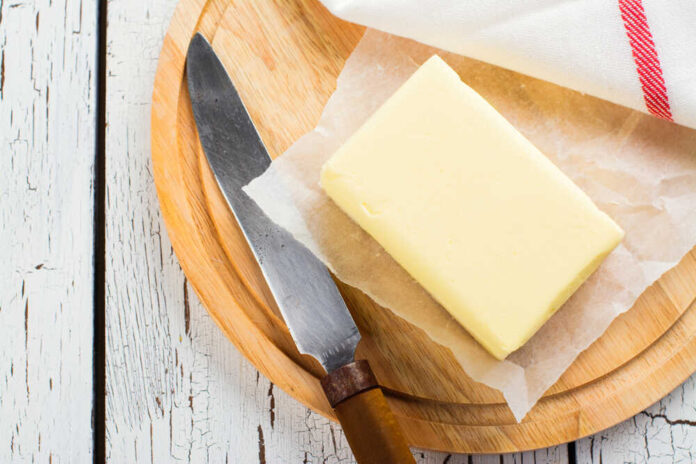
Butter has gone from hero to zero throughout the decades and is now in a slightly more neutral position. Butter isn’t a superfood or a villain. It’s best treated as an occasional flavor tool. Compared with water-or-olive-oil cooking, butter tends to raise LDL (“bad”) cholesterol, but compared with sugary ultra-processed foods, a little butter on real food can be the least of your worries. Overall health impact depends on what you replace it with and how much you use.
Butter 101
Butter is 80–82% fat, and most of that fat is saturated with some mono- and a little polyunsaturated fat, plus tiny amounts of vitamins, but not enough to drive health decisions.
What the big evidence actually says
1) Butter on its own: mostly neutral at population level
A large 2016 meta-analysis (636,000+ people) found butter had little to no association with heart disease and only a very small signal with total mortality, and for type 2 diabetes the association was slightly inverse, meaning it is a tiny bit protective. Translation: butter wasn’t strongly linked either way. That doesn’t make it “healthy”, but it’s just not a major lever compared with bigger dietary moves.
2) Swap test: what you use instead matters
When you replace saturated fat, like butter, with unsaturated fats, like olive, canola, nuts, seeds, LDL drops and cardiovascular risk falls. This “replacement rule” is one of nutrition’s most consistent findings.
3) Head-to-head: butter vs. olive oil
Randomized trials show butter raises LDL cholesterol compared with olive oil (HDL may rise a bit too, but the LDL rise is the problem). For people with high cholesterol, minimizing butter is advised.
4) The dairy “food matrix” twist
Odd but true: cheese, which has the same dairy fat, but with a different structure, tends to raise LDL less than butter in controlled trials, which is likely due to calcium/protein and the cheese matrix. So how fat is packaged can matter.
So… is butter bad or brilliant?
Think of butter like sunshine: a little can brighten everything; too much burns.
- “Bad” lane: Using butter as your default cooking fat (instead of olive/avocado oil) or piling it onto refined carbs → higher LDL, no fiber, needless calories.
- “Brilliant” lane: A small pat to help you enjoy vegetables or whole foods you’d otherwise skip; swapping butter in for ultra-processed junk—not perfect, but a net lifestyle win.
- Reality lane (most of us): Use sparingly, and let unsaturated fats do the daily heavy lifting.
Practical rules for sane butter use
1) Make unsaturated fats your default.
Cook most days with extra-virgin olive oil for salads or low-to-medium heat cooking, or high-oleic/neutral oils as needed. Save butter for finishing flavor or baking.
2) Keep portions tiny but satisfying.
Think teaspoon, not tablespoon. A pat melted over roasted veggies can feel indulgent with a fraction of the calories.
3) Pair butter with fiber & protein.
On whole grains, beans, potatoes, or veg, a little butter rides along with fiber that helps cholesterol and fullness—way better than butter on white bread with nothing else.
4) For high heat, use ghee (clarified butter) or an oil.
Ghee has a higher smoke point than regular butter because the milk solids are removed. It still behaves like saturated fat metabolically—so same moderation rules—but it’s less likely to scorch.
5) If LDL is a concern, tighten up.
Hyperlipidemia? Keep butter minimal and favor oils, nuts, seeds, fish, and legumes; they improve your lipid profile while keeping meals delicious.
Common myths, de-fanged
- “Butter is back!”
Catchy headline, not quite true. The best data say butter is mostly neutral, and swapping to unsaturated fats is better for heart health. - “Natural = safe to eat freely.”
Poison ivy is natural. Butter’s “natural” doesn’t cancel its LDL effect. Dose and context still matter. - “All dairy fat behaves the same.”
Nope, cheese doesn’t equal butter in lipid effects, thanks to the food matrix.
A quick decision guide
- Want heart-smart everyday cooking? → Olive oil as default; butter as a finish.
- Baking a treat? → Butter’s fine; it’s dessert—enjoy and move on.
- Hate veggies unless they taste amazing? → A teaspoon of butter to help you eat a big bowl of greens is a reasonable trade.
- High LDL, family history, or recent event? → Keep butter occasional, lean into unsaturated fats, and work with your clinician.
Butter sits between bad and brilliant. Used sparingly, and replaced often with unsaturated fats, it can live in a healthy diet without drama. Make oils and whole foods your everyday players and let butter cameo when flavor truly matters.
Copyright 2025, GoHealthier.com