
Using lasers to heal our bodies seems right out of a sci-fi novel or series, but is it possible that lasers are the future of joint relief? Traditionally, treatment has focused on medications, physical therapy, injections, or in severe cases, surgery. But recently, a new player has been making its way into clinics and research labs: laser therapy. It sounds futuristic—shining light to ease pain—but the science behind it is becoming surprisingly solid, and with joint pain being one of the most common complaints worldwide, whether it’s from arthritis, injury, or just years of wear and tear, this new frontier of laser therapy could affect millions.
What Exactly Is Laser Therapy for Joints?
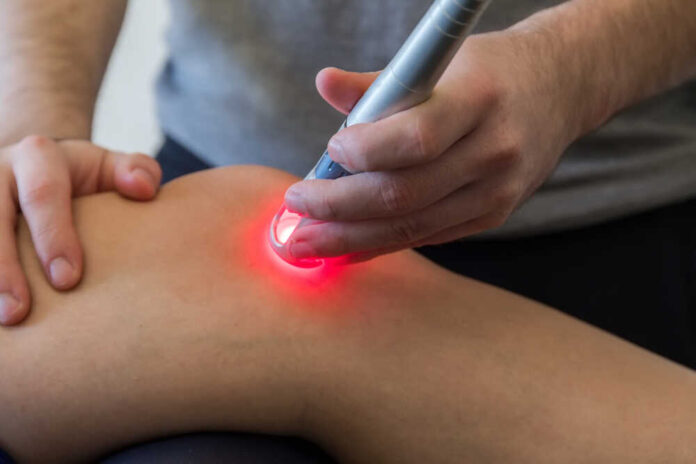
The technical name is low-level laser therapy (LLLT) or photobiomodulation therapy (PBM). Unlike the high-powered surgical lasers used to cut tissue, these are low-intensity light beams, usually in the red or near-infrared spectrum.
- How it works: The light penetrates skin and tissue, where it interacts with cell structures (especially mitochondria). This interaction boosts cellular energy (ATP), reduces inflammation, and promotes healing.
- Think of it as: Giving your cells a “light vitamin”—an energy nudge that helps them repair faster and function better.
What the Research Shows
Pain Relief and Inflammation
- Multiple studies suggest LLLT can reduce pain and stiffness in osteoarthritis, especially in knees and hands.
- Inflammatory markers often drop after treatment, suggesting lasers help calm the fire at the root of joint pain.
Healing and Function
- Athletes have used laser therapy for sprains and tendon injuries, with some evidence of faster recovery.
- In joints, it may improve range of motion and function when combined with exercise or rehab.
Comparison to Other Treatments
- Lasers don’t replace physical therapy or strength training (which are critical for long-term joint health).
- But unlike painkillers, they come with minimal side effects. And unlike injections or surgery, they’re non-invasive.
What a Session Looks Like
- Quick: Usually 5–20 minutes.
- Painless: You feel only a mild warmth, if anything.
- Repeated: Most protocols require multiple sessions per week for several weeks.
- Safe: No radiation exposure, no burning—the power is too low for tissue damage.
Who Might Benefit Most
- People with osteoarthritis of the knees, hips, or hands.
- Athletes or active folks with overuse injuries.
- Those who want pain relief but can’t tolerate medications or injections.
Who Should Be Cautious
- Not recommended directly over cancerous tissue.
- Safety in pregnancy isn’t well established.
- People with photosensitivity disorders should avoid it.
The Future of Laser Therapy
While research is still evolving, the buzz is strong because:
- Devices are becoming smaller and more affordable (some are even marketed for home use).
- Clinics are adding it as a drug-free pain management option.
- Scientists are exploring whether it can be combined with stem cell therapy or PRP (platelet-rich plasma) to boost regeneration.
We’re not at the point where lasers can replace knee replacements—but as part of a joint-care toolkit, they’re looking like a promising, side-effect-light option.
Lasers for joint pain may sound like sci-fi, but they’re increasingly science fact. By reducing inflammation, easing pain, and nudging healing processes, laser therapy could play a growing role in arthritis management and recovery from joint injuries.
If you’re dealing with nagging joint pain, laser therapy could be worth exploring with your healthcare provider. It’s not a magic cure, but it may be a valuable adjunct to exercise, nutrition, and medical care. Combined with AI, who knows what the future of joint pain treatment will look like?
Copyright 2025, GoHealthier.com